How to stop keyless car theft from your driveway

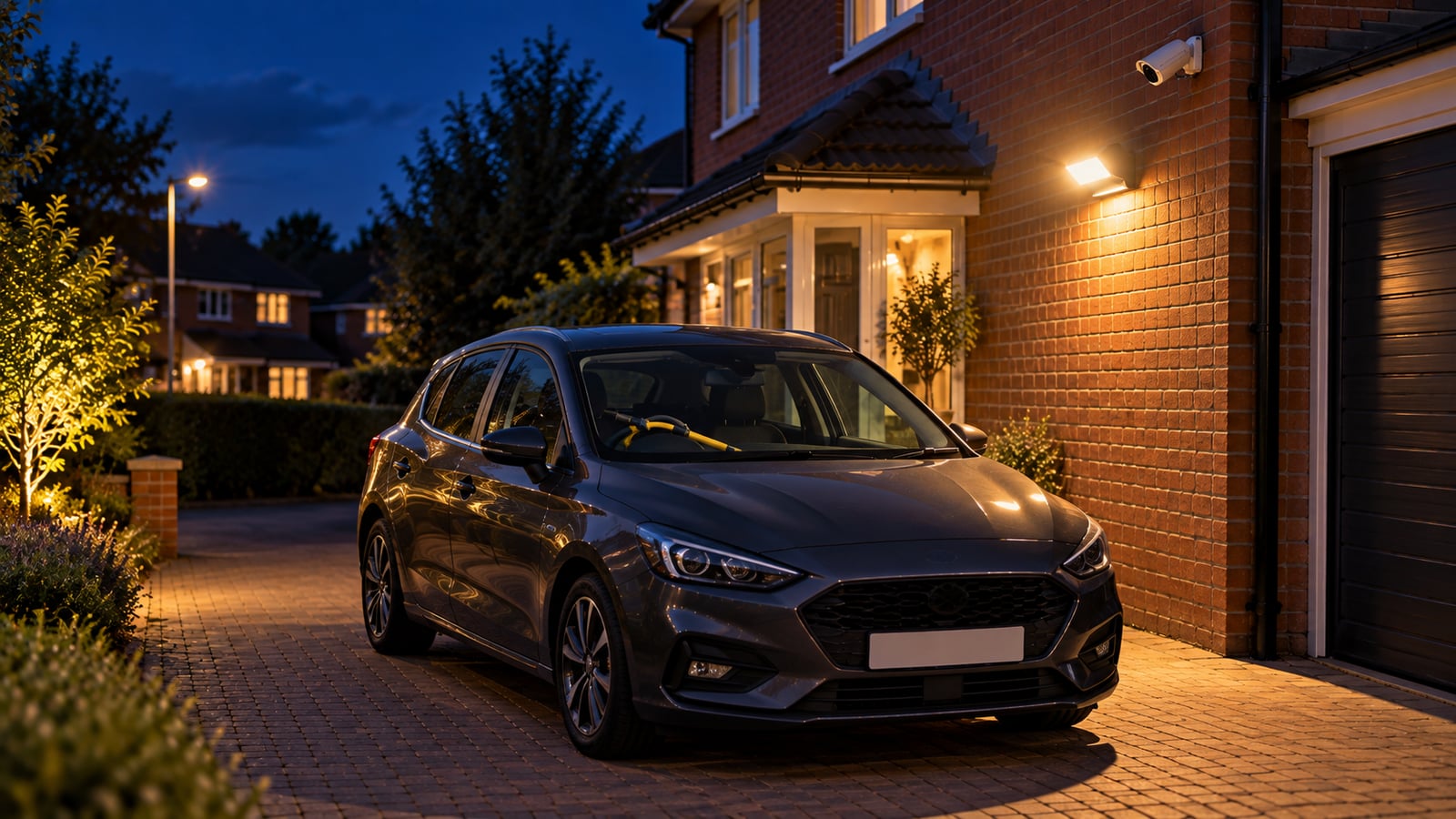
AI-generated illustration
Most keyless cars stolen from UK driveways are taken using a relay attack: thieves capture the signal from your key inside the house and use it to unlock and start the car. The fix is to stop the key signal reaching the car, then add physical barriers that slow thieves down, and lighting and cameras that make your drive a worse target.
None of it is expensive. Most of it takes ten minutes.
Some links below are Amazon links. If you buy through them we may earn a small commission at no extra cost to you. As an Amazon Associate I earn from qualifying purchases.
How keyless car theft works
Keyless entry lets you unlock and start the car as long as the key is close by. Thieves exploit that.
- The relay attack. One thief stands close to your front door or window with a device that picks up your key’s signal. A second thief stands by the car with another device that repeats it. The car thinks the key is next to it, unlocks and starts.
- Programming a new key. Some thieves get into the car and plug a device into the diagnostic (OBD) port under the dashboard to program a new key.
- Other electronic methods. On some models, thieves access the car’s wiring from outside, for example behind a headlight, to unlock it.
The common thread: they are fast, quiet and usually happen at night. A visible camera alone will not stop a determined crew, but the steps below make your car much harder and slower to take.
1. Block the key signal
This is the most important step.
- Keep keys in a signal-blocking pouch or box at night, away from the front door. A Faraday key pouch or a signal-blocking key box both work.
- Test it. Put the key inside, stand next to the car and try the door. If it opens, replace the pouch. Pouches wear out with use.
- Do not leave keys by the front door, on the hall table or hanging by the door. That is exactly where thieves aim their devices.
- Turn off keyless entry, or use the key’s sleep mode, if your car allows it. Check the handbook. This is the most effective fix of all.
- Spare keys too. The spare in a kitchen drawer can be relayed just as easily.
2. Add physical barriers
If thieves do get in, make driving away slow and obvious.
- A visible steering wheel lock. A sturdy Disklok steering wheel lock takes time to remove and tells thieves to try another car. Look for one with a recognised security rating.
- An OBD port lock. A lock for the diagnostic port makes it harder to program a new key. On some cars a dealer or specialist can fit one.
- Block the car in. Park a second car behind it, or fit a driveway security post that has to be unlocked before the car can leave.
3. Make the drive a worse target
Thieves prefer cars they can take in the dark, unseen.
- Light the drive. A motion sensor floodlight over the car startles people and gives your camera a clear picture.
- Cover the car with a camera that can see faces and, ideally, number plates at night. Mount it at about 2.5 to 3 metres, angled along the drive, not straight down. See where CCTV cameras should go.
- Turn on alerts for people and vehicles, so your phone wakes you if someone approaches the car at 3am.
- A CCTV sign adds to the deterrent.
4. Help get it back
- A tracker fitted somewhere hidden can help police recover the car. Some insurers favour approved, professionally monitored trackers.
- Note down your car’s details and keep photos, so you can report it quickly.
- If you see a theft in progress, call 999. Do not confront the thieves.
Quick checklist
| Tonight | Done? |
|---|---|
| Keys in a tested signal-blocking pouch or box, away from the door | |
| Spare keys protected too | |
| Keyless entry turned off or key in sleep mode, if possible | |
| Steering wheel lock on | |
| Drive lit, camera covering the car | |
| Phone alerts on for people and vehicles |
For more ways to protect your home through the darker months, see our dark nights checklist.
Want an instant chime the moment someone steps on the drive? See our guide to the best driveway alarms.
Ready to cover your driveway? See the best cameras with no monthly fee for our top picks.
Common questions
How do thieves steal keyless cars?
Do signal-blocking pouches actually work?
Can I turn off keyless entry?
Will CCTV stop my car being stolen?
Is a steering wheel lock worth it?
Related guides

The best driveway alarms in the UK
A driveway alarm chimes inside the house the moment someone comes onto your property. Here are the best wireless and solar options, and how to set one up without false alarms.

Where should CCTV cameras go on a semi-detached house?
Where to put CCTV on a UK home: front door, driveway, side passage and back garden, plus mounting height, angles, night vision and neighbours.

Dark nights home security checklist
The clocks have gone back. A practical checklist to make your home look occupied, light up dark spots and keep cameras working all winter.

Best home CCTV and security cameras UK: no subscription
The best UK home security cameras with no subscription, from budget picks to wired systems. Chosen by a former RAF Police security professional.