Dark nights home security checklist

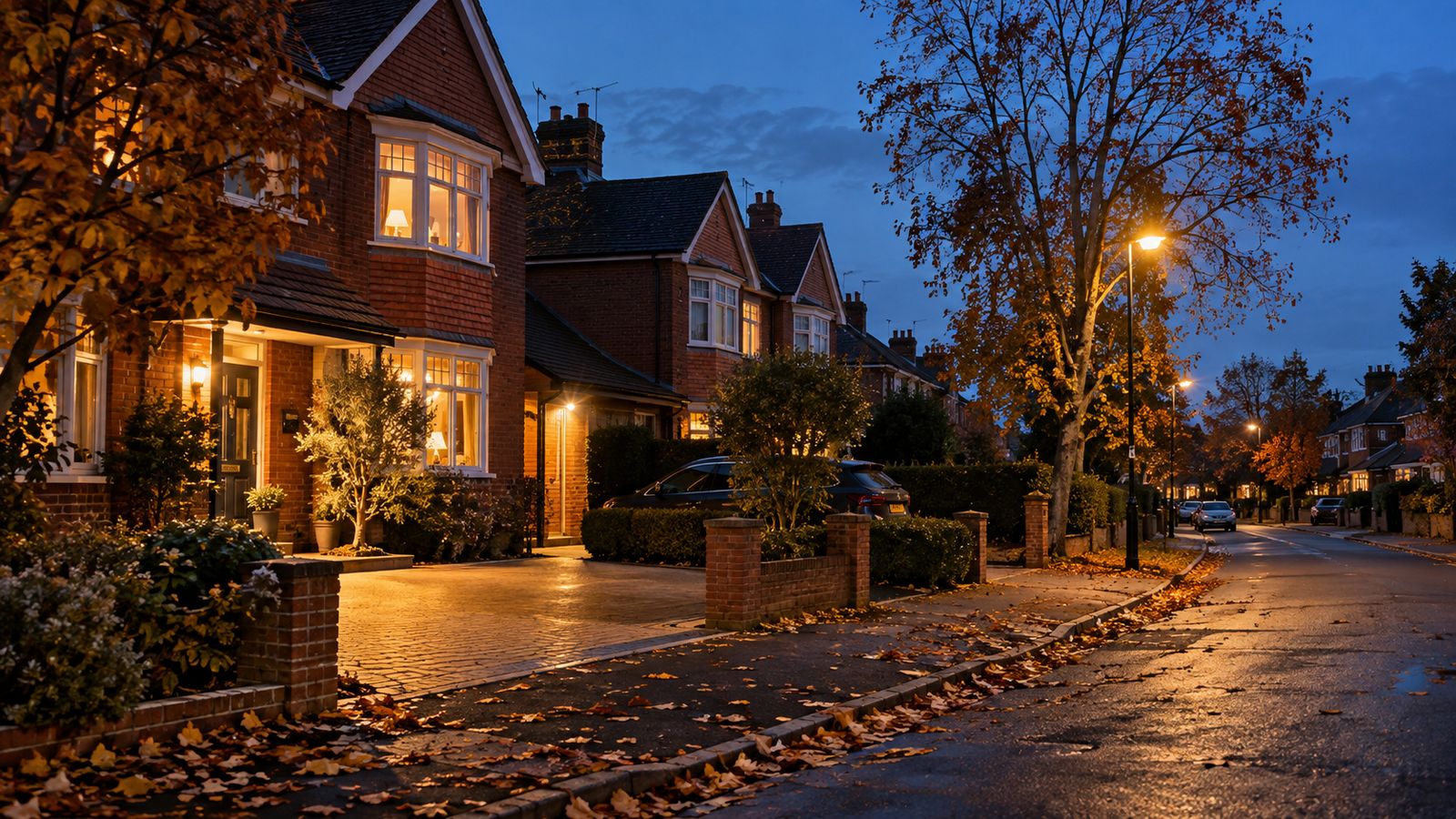
AI-generated illustration
The clocks went back at 2am on Sunday 25 October. From then on it is dark by late afternoon, which means many homes sit empty and unlit for hours before anyone gets home. That is exactly what opportunist burglars look for. Police forces run dark nights campaigns every autumn for this reason.
The good news is that most of the fixes are cheap and take an afternoon. Work through this checklist now the clocks have changed.
Some links below are Amazon links. If you buy through them we may earn a small commission at no extra cost to you. As an Amazon Associate I earn from qualifying purchases.
1. Make the house look occupied
A dark house at 5pm says nobody is home.
- Put two or three lamps on timers or smart plugs, in different rooms, set to come on around dusk and go off at different times. Cheap plug-in timers do the job; smart plugs let you change times from your phone.
- Avoid one light left on all night. It looks staged. Varied timings look lived in.
- Close curtains or blinds at dusk so nobody can see whether rooms are empty, or whether there is anything worth taking.
- A radio on a timer in a front room adds to the effect.
2. Light up the dark spots
Darkness is cover. Light takes it away.
- Motion floodlights on the drive, side passage and back garden. These are the routes in. Motion sensor floodlights come on when someone approaches, which startles opportunists and gives your cameras a clear picture.
- Solar lights for spots without power, such as a shed or the end of the garden. Solar motion lights are easy to fit, but put them where they get some daylight.
- Point lights down, not into neighbours’ windows. Glare annoys neighbours and can blind your own cameras.
For a full guide to types, brightness and where to put them, see the best security lights.
3. Check every camera’s night view
What a camera shows at midday and what it shows at 6pm in November are very different things.
- Open each camera’s live view after dark and check you can recognise a face at the door, on the drive and at the side gate.
- Look for infrared glare, where the camera’s own night lights bounce off a wall, gutter or window and wash out the picture. Move the camera slightly if so.
- Add light where faces are dark. A floodlight near a camera turns a grey shape into a usable face.
- Top up battery cameras. Shorter days mean less solar charging. A solar panel helps — such as the Reolink solar panel (for Reolink Argus cameras) or the eufy solar panel (for eufyCam 2, 3 and S series). Check the battery levels in the app each week through winter.
If battery drain is a recurring problem, see why your security camera battery drains so fast for the most common causes and fixes.
If you have not set cameras up yet, start with where CCTV cameras should go.
4. Doors, windows and the side gate
Cameras record; locks keep people out.
- Lock the side gate and make sure it is taller than head height. It is the quiet route to the back of the house.
- Check back doors and patio doors lock properly and are actually locked, even when you are home.
- Lock away ladders and tools, which are often used to break in.
- Consider simple door and window alarms on back doors and ground-floor windows. They are cheap and make a lot of noise.
5. Protect the car
Dark evenings help car thieves too.
- Keep keyless car keys in a signal-blocking pouch or box, away from the front door, to stop relay attacks.
- Park on the drive under a light and within view of a camera.
- A visible steering wheel lock is another reason for a thief to move on.
- A driveway alarm chimes inside the house the moment someone comes onto the drive, before they reach the car. See the best driveway alarms.
For more on stopping relay attacks and keyless theft, read how to stop keyless car theft.
6. Tell people your cameras are there
- A CCTV sign on the gate or by the front door adds to the deterrent.
- Talk to your neighbours. People who know your cameras are there are more likely to tell you if they see something, and less likely to be upset about them. See is my CCTV legal if it sees next door?
Quick checklist
| After 25 October | Done? |
|---|---|
| Lamps on timers or smart plugs in two or three rooms | |
| Motion lights on drive, side passage and back garden | |
| Night view checked on every camera | |
| Battery camera levels checked, solar panels where needed | |
| Side gate locked, ladders and tools locked away | |
| Back and patio doors checked | |
| Keyless car keys in a signal-blocking pouch | |
| CCTV sign up |
For more on how cameras put burglars off, read do CCTV cameras actually deter burglars?
Ready to upgrade your cameras? See the best cameras with no monthly fee for our top picks.
Common questions
When did the clocks go back in 2026?
Do burglaries go up when the clocks change?
What is the cheapest way to make my home look occupied?
Should I leave lights on all the time when I am out?
Do CCTV cameras work properly in the dark?
Related guides

The best driveway alarms in the UK
A driveway alarm chimes inside the house the moment someone comes onto your property. Here are the best wireless and solar options, and how to set one up without false alarms.

How to stop keyless car theft from your driveway
How thieves steal keyless cars from UK driveways and the steps that stop them: signal-blocking pouches, steering locks, OBD locks and CCTV.

Do CCTV cameras actually deter burglars?
An honest look at whether home CCTV puts burglars off, when it works, when it does not, and how to get the most deterrent value from your cameras.

Where should CCTV cameras go on a semi-detached house?
Where to put CCTV on a UK home: front door, driveway, side passage and back garden, plus mounting height, angles, night vision and neighbours.